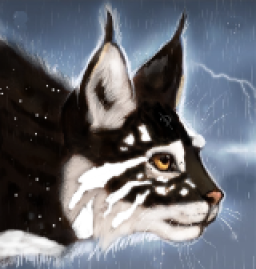
The Poem of Torthor Elegys

Thoronhen Tinnúviel #5205

mae govannen!

I feel like I'm asking a bit much here, so sorry. But I really struggle something with getting translations right and genuinely don't know how you guys are so good at it.

I want to translate this poem, The Poem of Torthor Elegys, to Sindarin. For the words black shadows I would like to use the Sindarin word dúath, for eagle: thoron, and for: wielder of storms, Torthor Elegys. Can someone help me? Also, what do you think of the poem?

The heart that bleeds is not rotten,

to darkness black shadows are sworn;

A call from the stars not forgotten,

ere dawn all light is reborn;

Not defined are the lost by the broken,

the song of the eagle will sound;

Of storms the ranger has spoken,

And the wielder of storms shall be found.

Hannon le in advance!

Celebrinor #5206

I like your poem! Very nice! I could translate this into Sindarin but I don't think I could have it rhyme like it is in English.

Your first sentence would be like Ú-thaw en·ind i hereitha, Which would be: Not rotten (is) the heart (metaphorically) that bleeds.

I had to coin "to bleed" because there is no word for it.

So if you are ok with that I could translate to the best of my abilities. :) I am still a learner like yourself.

Thoronhen Tinnúviel #5207

Thank you so much! It would help me a lot. It's always so hard to find the exact grammar rules for the exact sentence...

Thoronhen Tinnúviel #5208

I see what you did with the U-thaw, and I like it that you chose heart as in a inner thought kind of meaning. I don't know where hereitha comes from? But I love it.

It's so funny that sometimes I just think that you guys are all like high professors studying languages or something on harvard, and I'm just standing next to it like: 'Yeah, I just... think this language was really cool?'

But anyway thank you

Celebrinor #5212

You are welcome, I will work on some more later.

sereitha- comes from √SEREK root. “blood” + ✶-tă suf. “verb suffix (intransitive)” meaning "to bleed".

Hahaha, no I am just a regular Joe who happens to enjoy Tolkiens world and languages. There are some Linguists in the community though.

Celebrinor #5213

to darkness black shadows are sworn; gwestennin vo vôr i·ñgwaith

(I know you wanted dúath, but I am unsure what the plural would be, so opted for gwath. “Sworn by darkness are the shadows”)

A call from the stars not forgotten, Ú-líthannen nallan i·ñgîl “Not forgotten is the call of the stars”

ere dawn all light is reborn; Fo vinuial, cŷr il chalad “Before dawn, renewed is all light”

Before I continue I just want to clarify your “lost” in this: Not defined are the lost by the broken, is it those who are “wandering, displaced” or “gone to time”?

Thoronhen Tinnúviel #5214

I really like those translations you created there! I love the structure, and honestly, the poetic meaning you're using is exactly what I meant. I honestly never had someone really understand my writing as I use to write a bit vage here and there. So amazing!

About the "lost", in this sentence I mean the "wandering". So the sentence itself describes that even though people are hurt because of the past and need to wander to find themselves again are not defined by their own brokenness but by trying not to lose themselves.

About the dúath problem, I think I found maybe an solution. I went looking for some words with a similar structure (ending in -ath) and studying their plurals to see if we could maybe make a new neo-sindarin plural for our word. I found that most words ending in -ath had their plurals ending in -aith.

I also noticed that the word dúath had many meanings that are all a little bit different from eachother. (Some dark shadow/black shadow/night shadow). I may seem a little bit obsessed with this word but that's mostly because this poem is for someone who is called many names, one of them Dúath (the Black Shadow). I really like to kind of use that in the riddle you know, it gets that real sneaky hidden meaning behind it :).

Then I went to search for some really old sources and found this word: dúath, meaning "dark shadow" (i dhúath) (nightshade), pl. dúaith (i núaith). So maybe it would be: gwestennin vo vôr i·ñduaith/in·duaith (I don't know about the punctuation or articles, still getting the hang of that).

What do you think?

Celebrinor #5215

Let's take a look at dúath ( + gwath) “night-shadow”.

There is only one word ᴱN. lhuaith, m. ?“[unglossed]”.

I did some looking as well and Ellanto seems to think it would dúaith so with the article it would be i·ndúaith.

Not defined are the lost by the broken, Ú-emerthennin idh·rendir vo i·naedh celir (Not defined are the wanderers by the wounds they bear)

the song of the eagle will sound; lind e·thoron leniatha

Of storms the ranger has spoken, e·dorandir bêd oh in·elegys (The ranger speaks about the storms)

ᴺS. torrandir n. “ranger (lit.) forest wanderer”

And the wielder of storms shall be found. A thorthor elegys tho hirnen (And the wielder of storms will be found)

I am really unsure about “will be found” Might need some other eyes on this.